
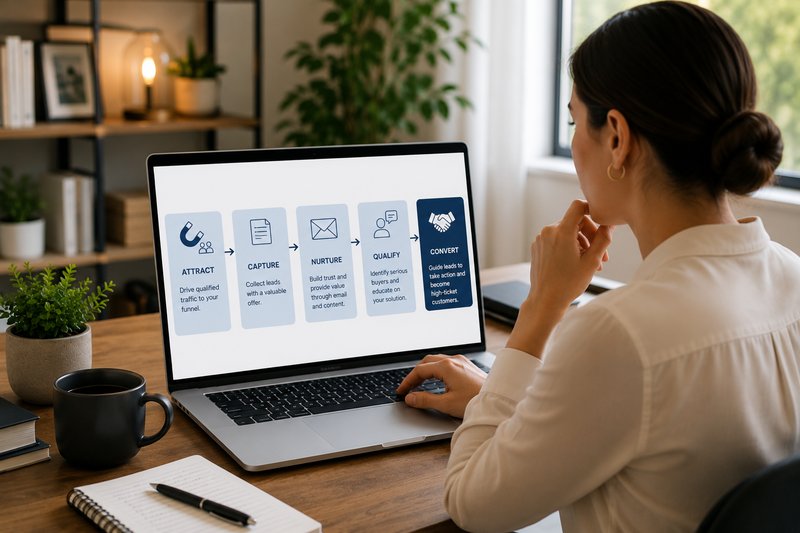
If you’re selling a high-ticket offer, a basic funnel and a polished landing page usually aren’t enough. A higher price point changes how people evaluate your business. They take more time, ask more questions, and expect stronger proof before making a decision. Your funnel needs to build trust, answer common concerns, explain the value of your offer, and guide people toward the next step.
This is where many businesses struggle. You may know how to drive traffic or generate leads, but high-ticket buyers rarely make quick decisions. They compare options, do their research, and pay close attention to the details. Before you choose a sales funnel creator or start building your funnel, it helps to understand what makes a high-ticket funnel successful.
Match the Buying Journey
A high-ticket purchase usually takes longer than a low-cost sale. When someone is making a major investment, they want to feel confident before they commit. Your funnel should support that decision rather than rush it.
Think about buying a car. You probably wouldn’t buy the first one you saw after reading a single ad. You would compare options, ask questions, and take a closer look before making a decision. High-ticket buyers do the same thing.
This is why understanding how to build a marketing funnel that supports a longer decision-making process is so important. Your funnel should guide people step by step rather than push them straight to a sale.
While there are two-step funnels that lead to a six-figure offer, most take more steps and a longer nurturing cycle to encourage a leads towards a conversion. Your funnel should include content that builds confidence over time. You might offer a lead magnet, an email sequence, a webinar, a case study, or a strategy call before asking someone to buy. The exact path will vary, but the goal stays the same. Give people the information they need at the right time.
Build Trust at Every Step
Trust matters even more when you’re selling a premium offer. People want to know that you understand their problem and can deliver on your promise. Confusing or inconsistent messaging makes people more likely to leave.
Start by clearly explaining who your offer is for, what problem it solves, and what buyers can realistically expect. Your landing pages, emails, and follow-up messages should all tell the same story. If your ad promises one thing but your landing page says something different, people may begin to question your credibility.
Social proof also becomes more important. Customer reviews, testimonials (especially video testimonials), and case studies help people feel more confident about moving forward.
For example, if you offer business coaching, don’t simply say you help clients grow. Show how multiple clients increased qualified leads, booked more sales calls, or improved their follow-up process. Show leads how investing in your offer can help solve their problems. Specific results are much more convincing than broad claims.
Qualify the Right Leads
Not every lead is a good fit for a high-ticket offer. In fact, fewer but better-qualified leads often produce better results.
This is why many businesses include an application, quiz, or booking form before scheduling a sales call. These tools help you understand whether someone is a good fit, how familiar they are with the problem, and whether they’re ready to move forward so they can benefit fully from your offer.
A sales funnel creator with automation, tagging, and conditional paths makes this process much easier. Someone who is ready to book a call can move directly to the next step, while someone who needs more information can continue through a nurture sequence. That creates a better experience for both your prospects and your sales team.
Keep Your Offer Clear
Many businesses try to make a premium offer sound impressive, but they end up making it confusing. Clear communication is one of the biggest reasons high-ticket funnels succeed.
People should quickly understand what you’re offering, who it’s for, and why it’s valuable. You don’t need to explain every detail right away, but you do need to make the value easy to understand.
For example, e-commerce consultants should explain how the process works, what clients receive, and what results to expect. Clear explanations build confidence. Confusing language creates doubt.
What’s also important is speaking clearly to who your high-ticket is not for. Be clear to qualify further at every stage so that leads that reach later stages of your nurturing sequence are closer to the idea avatar that will benefit from your offer.
Improve with Data
A high-ticket funnel should never rely on guesswork. Because each sale is worth more, even small improvements can have a meaningful impact.
Track where your leads come from, how they move through your funnel, where they leave, and which content keeps them engaged. Those insights help you focus on the changes that will have the greatest impact.
For example, one ad campaign may generate a large number of leads but very few sales. Another campaign may bring in fewer leads that convert much more often. Without data, those campaigns may look equally successful. Analytics shows you where to invest your time and budget.
The same idea applies to your messaging. If visitors leave your application halfway through, your form may be too long. If people open your emails but never click, your offer or call to action may need to be stronger. Data helps you improve your funnel based on real behavior instead of assumptions.
Create a Natural Sales Experience
The best high-ticket funnels never feel pushy. They feel helpful, organized, easy to follow and clearly disqualify the wrong buyers. Every step should answer a question, build trust, or move someone closer to a confident decision or away from something that isn’t for them.
Think of your funnel as a guided experience. Your landing page introduces the offer. Your email sequence explains the value. Your case studies build credibility. Your booking page makes the next step clear. Each piece has a specific job, and together they create a buying experience that feels natural.
Before you start building, make sure your funnel reflects the way your audience actually makes buying decisions. High-ticket sales take time, clear communication, and consistent follow-up. When your funnel supports that process, you’ll attract better-qualified leads and create more opportunities to convert them into customers.
Build a Funnel That Earns Confidence
A high-ticket sales funnel gives potential customers the information and reassurance they need to make a major buying decision. When you focus on trust, clear communication, thoughtful follow-up, and continuous improvement, your funnel becomes much more effective. The result is a sales process that attracts better-qualified leads and turns more of them into customers.
For high-ticket funnels, consider hiring a funnel specialist and equipping that person with specialized tools to create a comprehensive journey leading to a high-ticket offer. Online tools like ClickFunnels provide beginners and seasoned experts alike with the resources to succeed, whether they are creating a top-of-funnel offer or a six-figure mastermind funnel.